Cracking Google’s Local 3-Pack: A Step-by-Step Optimization Playbook
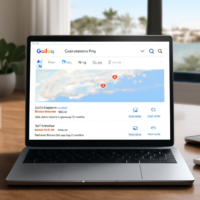
The three businesses that appear at the top of a local Google search, right under the map, get the lion’s share of clicks. Studies from BrightLocal and Moz have consistently shown that this prime real estate, often called the local 3-pack or map pack, captures more than 40% of all clicks on local search results pages. For a hardware store, dental office, or auto repair shop, landing in those three slots can mean the difference between a packed schedule and a quiet afternoon.
Getting there isn’t luck. Google uses a specific set of signals to decide which businesses earn those spots, and most of them can be influenced with deliberate work. Here’s a closer look at what actually moves the needle.
The short version: build out your Google Business Profile completely, collect reviews on a steady schedule, earn links from other local organizations, and make sure your website clearly signals where you are and what you do. Each of those areas is covered below.
Start with a Fully Built Google Business Profile
Google Business Profile (formerly Google My Business) is the foundation of every local ranking strategy. A profile that’s been claimed but left half-empty rarely competes with one that’s been filled out completely. Local SEO professionals often recommend treating the profile like a small website, not a directory listing.
That means choosing the most accurate primary category, then adding every relevant secondary category. A bakery that also serves breakfast should select both “Bakery” and “Breakfast Restaurant.” Skipping secondary categories is one of the most common oversights, and it directly limits the search queries a business can show up for.
Other profile elements worth completing include detailed business hours (with holiday hours updated regularly), service areas, attributes like “wheelchair accessible” or “free Wi-Fi,” and a description that uses natural language rather than keyword stuffing. Google has confirmed that the description itself isn’t a ranking factor, but it does influence whether searchers click through.
Photos and Posts Are Not Optional
Profiles with regular photo uploads tend to receive more views and direction requests. Many local marketers suggest adding fresh photos at least once a month, including interior shots, exterior shots from the street view angle, team photos, and product or service images. Profiles that look active signal to both Google and searchers that the business is open and engaged.
Google Posts, which appear directly on the profile, work similarly. They don’t carry the same weight as reviews or citations, but they keep the listing dynamic and give searchers a reason to stay on the profile longer.
Get Serious About Reviews
Review signals are one of the strongest factors in local pack rankings. Quantity, recency, velocity, and overall star rating all play a role. A business with 200 reviews averaging 4.7 stars will almost always outrank a competitor with 12 reviews, all other things being equal.
Consistency matters more than a one-time push. A business that earned 80 reviews three years ago and nothing since often loses ground to a newer competitor adding two or three reviews a week. Google appears to weigh recent reviews more heavily because they suggest the business is currently active.
Responding to reviews matters too. Replies, especially thoughtful ones to both positive and negative feedback, demonstrate engagement. Some studies have found a correlation between response rate and local ranking position, though Google hasn’t explicitly confirmed it as a factor.
Keywords in Reviews
When customers naturally mention specific services or products in their reviews, those terms get indexed by Google and can help the business rank for related searches. A plumber whose reviews frequently mention “water heater installation” or “emergency drain cleaning” may see better visibility for those exact queries. Asking customers to describe what was done, rather than just leaving a star rating, can encourage more keyword-rich content.
Build a Local Link Profile
Backlinks remain a top-tier ranking signal for organic search, and they carry over into local rankings as well. The catch is that local businesses benefit most from local links, not generic ones. A sponsorship of the town’s youth soccer league, a mention in the regional newspaper, or a feature on a community blog often outperforms a link from a high-authority but irrelevant national site.
Joining the local chamber of commerce, sponsoring community events, partnering with neighboring businesses for cross-promotion, and getting interviewed on local podcasts are all proven tactics. Each link tells Google that the business is genuinely embedded in its community.
Optimize the Website for Local Intent
The local pack pulls from both the Google Business Profile and the linked website. A site that’s vague about its location and services makes Google’s job harder. At minimum, the homepage should include the city or service area in the title tag, an H1 that references what the business does and where, and embedded location information using schema markup.
LocalBusiness schema, with properties for address, phone, opening hours, and geo coordinates, helps search engines parse the basics quickly. For multi-location businesses, each location should have its own dedicated page with unique content, not a copy-paste template with just the address changed.
Page speed and mobile usability matter more than ever. Most local searches now happen on phones, often while the searcher is already in the car. A website that takes six seconds to load on mobile is a website losing customers to whoever ranks above it.
Service and Location Pages
A business that serves multiple neighborhoods or offers several distinct services benefits from creating individual pages for each. A landscaping company might have separate pages for lawn care, hardscaping, and irrigation, plus pages targeting each town it serves. These pages should read naturally, not like keyword spam, and include genuinely useful information about what’s offered and how the service works in that specific area.
Proximity Still Rules, But It Can Be Influenced
One frustrating reality of local SEO is that proximity to the searcher heavily influences which businesses show up. Someone searching from across town may see a completely different 3-pack than someone searching from the next block over. This can’t be fully overcome, but strong rankings on other signals do expand the radius at which a business shows up.
Many SEO professionals use grid-based rank tracking tools to see exactly where their business ranks across a city, not just from one address. The patterns these tools reveal often expose weak spots that more reviews, better content, or stronger citations can shore up.
Track, Adjust, Repeat
Local rankings shift constantly. Algorithm updates, new competitors, lapsed citations, and changes to the Google Business Profile interface all create movement. Businesses that treat local SEO as a one-time project rarely hold their position for long. The ones that consistently appear in the 3-pack tend to have someone, in-house or external, watching the rankings, refreshing the profile, and chasing down new opportunities every month.
The local 3-pack rewards businesses that show up online the same way they’d want to show up in their physical location: complete, current, welcoming, and worth choosing.
FAQ
What is the Google local 3-pack?
The local 3-pack (also called the map pack) is the set of three business listings that appear at the top of a local Google search, directly below the map. Studies from BrightLocal and Moz have shown it captures more than 40% of all clicks on local search results pages.
What is the most important factor for ranking in the local 3-pack?
The article identifies a fully built Google Business Profile, steady review acquisition, and a locally relevant link profile as the top signals. A completely filled-out profile, consistent reviews (with quantity, recency, velocity, and star rating all mattering), and links from local sources like chambers of commerce, community sponsorships, and regional publications carry the most weight.
Why does proximity matter for local pack rankings?
Google’s local algorithm weighs how close the searcher is to the business when deciding which three listings to show. Two people searching the same term from different parts of a city can see entirely different 3-packs. Strong rankings on other signals, including reviews, links, and on-page optimization, can expand the radius at which a business appears.
Related coverage
Recent Posts
Share
Advertisement