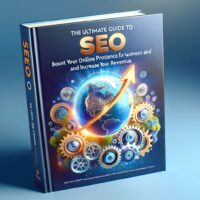
The Ultimate Guide to SEO for Business Owners: Boost Your Online Presence and Increase Your Revenue
Search Engine Optimization (SEO) is the practice of optimizing your website so search engines like Google rank it higher on the Search Engine Results Page (SERP), driving organic, unpaid traffic to your site. For business owners of any size, a working SEO strategy directly affects online visibility, website traffic, and revenue. This guide covers the core areas of SEO and how to apply them to a business website.
What Is SEO and Why Does It Matter?
SEO aims to raise your website’s visibility and credibility, attracting organic traffic and potential customers. It is a foundational part of online marketing because higher rankings in search results translate into more visits from people actively searching for what you offer.
How Do Keywords Work in SEO?
Keywords are the specific words and phrases users type into search engines when looking for information, products, or services related to your business. Placing relevant keywords in your website content, meta tags, alt tags, and URLs improves the chances that your pages appear prominently in search results.
A solid keyword strategy starts with research to identify terms that are relevant, popular, and have a reasonable search volume. Tools such as Google Keyword Planner, SEMrush, and Moz Keyword Explorer help with this process.
Rather than fixating on a single primary keyword, use Long-Tail Keywords widely. Long-Tail Keywords are longer, more specific phrases with comparatively lower search volume, but together they account for the bulk of search queries online. A wide range of long-tail keywords tied to your business niche raises your site’s visibility and reaches people searching for specific offerings.
On-Page Optimization: The Parts You Control
On-page optimization covers everything you can change on your website to improve its SEO. Where Off-Page SEO focuses on external signals like backlinks, social media mentions, and influencer activity, On-Page SEO puts you in direct control of making your site more search-engine friendly.
Metadata is a core piece of on-page optimization and includes title tags, meta descriptions, and header tags. Each page should have a unique, descriptive title tag under 60 characters with relevant keywords. Meta descriptions under 160 characters summarize the page and influence click-through rates from the SERP. Adding LSI (Latent Semantic Indexing) keywords, terms related to your primary keyword, in title tags and meta descriptions reinforces page relevance and visibility.
Content quality drives SEO performance. Pages should be informative and engaging, with target keywords woven in naturally. Stuffing keywords excessively can hurt rankings because search engines may penalize sites for keyword spamming. The goal is the right keyword density and natural language flow.
User experience also matters. Loading speed, responsiveness across devices, intuitive navigation, readable fonts, and appealing design all feed into how a page performs. Research shows that sites offering a smooth experience rank higher on search results pages. Optimized images, clear calls-to-action, and interactive elements further improve satisfaction.
Off-Page Optimization: Building Authority and Trust
Off-page optimization covers work you do outside your website to raise its visibility and authority.
Link building is a significant, time-consuming off-page tactic. High-quality backlinks from reputable websites signal credibility to search engines, but quality matters more than quantity. Backlinks from low-quality or spammy sites can hurt SEO. Effective link-building tactics include guest posts, participation in industry forums and communities, social media activity, and shareable content that earns links naturally.
A strong social media presence supports off-page optimization. Engaging audiences on Facebook, Twitter, LinkedIn, and Instagram increases brand visibility and creates more opportunities for shares, which in turn supports link building and organic traffic.
Monitoring and managing your online reputation is also part of off-page work. Responding to reviews, addressing complaints quickly, and showing strong customer service build a positive reputation that sustains trust and credibility.
Why Continuous Optimization Matters
SEO shifts constantly as search engines update their algorithms to deliver better results. Business owners who keep up with current practices, trends, and algorithm changes hold a competitive edge.
Local SEO has grown as algorithms favor localized results. Optimizing for local search drives targeted traffic from users near your physical location. Pages should include accurate address, phone number, and business hours, and your Google My Business profile should be fully optimized to amplify local SEO.
Voice search is an emerging trend to plan for. With smart speakers and voice-assistant devices on the rise, content optimized for voice queries can offer a competitive advantage. Long-tail keywords, structured data, schemas, and FAQs help search engines understand and surface your content for voice searches.
Putting It All Together
Effective SEO raises a business’s online visibility, organic traffic, and revenue. Investing time in the practices covered here pays off for both Small and Medium-sized Enterprises (SMEs) and larger organizations.
Through thorough keyword research, sound on-page optimization, high-quality backlinks, active reputation management, and awareness of current trends, a website can reach more potential customers and rank more consistently over time.
SEO is an ongoing process rather than a one-time task. Continuing to apply these practices builds higher visibility, more organic traffic, stronger brand credibility, and more revenue.
FAQ
What is SEO and why does it matter for business owners?
SEO is the practice of optimizing your website so search engines rank it higher on the Search Engine Results Page (SERP), which drives organic, unpaid traffic. For business owners, higher rankings translate directly into more website visits, more potential customers, and more revenue.
What is the difference between on-page and off-page SEO?
On-page SEO covers changes made directly on your website, such as title tags, meta descriptions, header tags, content quality, and user experience. Off-page SEO covers activity outside your website, primarily link building, social media engagement, and online reputation management, that builds your site’s authority and trust.
Why are long-tail keywords important for SEO?
Long-tail keywords are longer, more specific phrases with lower individual search volume, but they make up the bulk of search queries online. Targeting a wide range of long-tail keywords tied to your business niche improves visibility and reaches users actively searching for specific products or services.
Related coverage
- The Ultimate Guide to SEO for Business Owners: Boost Your Online Presence and Increase Your Revenue
- The Importance of SEO for Business Owners: Boost Your Online Presence and Increase your Revenue
Recent Posts
Share
Advertisement