
Local Search Statistics That Should Shape Every Storefront’s Marketing Strategy
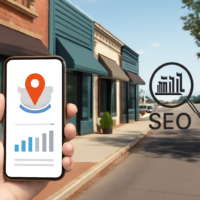
Local searches now account for roughly 46% of all Google queries, and 76% of people who search locally on a smartphone visit a related business within 24 hours. For owners of physical storefronts, repair shops, offices, and showrooms, those two numbers explain why online visibility has become as important as the storefront itself.
What follows is a look at the statistics that matter most, along with practical context for why they should shape how brick-and-mortar businesses approach their marketing.
The Sheer Volume of Local Searches Is Staggering
Google has reported that roughly 46% of all searches on its platform have local intent. People aren’t just looking for information. They’re looking for a place to go, a service to book, or a product to pick up nearby.
Even more telling, “near me” searches have grown by over 500% in recent years, according to data Google has shared publicly. Phrases like “coffee near me,” “auto repair near me,” and “pediatric dentist near me” have become the default way consumers express purchase intent. A business that doesn’t appear in those results is essentially invisible to a huge slice of its potential customer base.
Mobile Behavior Drives Most of It
Roughly 88% of consumers who conduct a local search on a smartphone visit or call a business within 24 hours. That statistic, often cited from Google’s consumer behavior research, underscores how urgent local search traffic tends to be. These are people ready to make a decision, often within hours.
About 76% of those mobile searchers end up visiting a related business the same day. Same-day visit intent is the rarest, most valuable form of consumer interest, and local search captures it at scale.
What Consumers Actually Do Before They Walk In
It’s tempting to think of foot traffic as spontaneous, but most of it isn’t. Research from the BrightLocal Local Consumer Review Survey, which has tracked consumer habits annually for over a decade, consistently shows that more than 98% of people read online reviews for local businesses at some point. Roughly 87% read reviews specifically before deciding to visit.
Reviews act as a filter. Consumers report that they need to see an average star rating of at least 4.0 before they’ll even consider doing business with a company. Anything lower gets skipped, often without a second thought.
The reading volume matters too. A consumer typically scans somewhere between 6 and 10 reviews before forming an opinion, and the recency of those reviews carries weight. Reviews older than three months are increasingly viewed as outdated, which means review generation has to be an ongoing effort, not a one-time push.
The Local Pack Captures the Lion’s Share of Clicks
When someone searches for a local business, Google often displays a map with three featured listings at the top of the results page. This is commonly called the local 3-pack, and it’s prime real estate. Studies of click-through behavior consistently show that the local pack captures somewhere between 33% and 44% of all clicks for searches with local intent.
Compare that to the organic blue links below the pack, which typically receive a small fraction of the attention. A business that’s not in those top three listings is competing for scraps, regardless of how strong its website might be.
Google Business Profiles Generate Action
An average Google Business Profile receives over 1,200 views per month, based on aggregated data from various analytics studies. Of those views, around 5% convert into some form of action: a website click, a phone call, a request for directions, or a message. That conversion rate is dramatically higher than most paid advertising channels.
Phone calls remain particularly important. Roughly 60% of consumers say they prefer to contact a local business directly by phone after finding it online, and businesses that display a click-to-call button on their listings see meaningful increases in inbound calls.
Trust Signals Matter More Than Most Owners Realize
Beyond reviews and star ratings, consumers pay attention to subtle cues that suggest a business is legitimate and active. A complete business profile with current photos, accurate hours, and detailed service descriptions consistently outperforms a bare-bones listing.
Listings with photos receive about 42% more requests for directions and 35% more click-throughs to their websites, according to Google’s own data. Photos signal that the business is real, cared for, and worth visiting.
Information accuracy also affects trust. When consumers find inconsistent details across different platforms, whether it’s a wrong phone number, an outdated address, or conflicting hours, they often abandon the search and choose a competitor. Studies from local search authorities like Moz have consistently shown that citation consistency is one of the top factors influencing local rankings, and inconsistent data is one of the most common reasons businesses lose visibility.
Voice Search and the Rise of Conversational Queries
Voice assistants have changed the way people phrase local searches. Instead of typing “pizza Long Island,” someone might ask their phone, “Where can I get a good slice of pizza right now?” Voice queries tend to be longer, more conversational, and more specific.
An estimated 58% of consumers have used voice search to find local business information in the past year. The percentage is even higher among younger demographics. For businesses that haven’t optimized their content for natural language queries, this represents a growing blind spot.
The Cost of Inaction
Perhaps the most sobering statistic of all comes from analyses of consumer drop-off behavior. When a local search returns results that are incomplete, outdated, or hard to interpret, roughly 70% of consumers will simply move on to the next option. They won’t call to verify. They won’t dig deeper. They’ll click the next listing.
That’s the hidden cost of poor local visibility. The customer never even knows what they missed, and neither does the business.
What These Numbers Suggest
The data tells a consistent story. Local search has become the primary way consumers discover, evaluate, and choose brick-and-mortar businesses. The volume of searches is enormous, the intent behind them is unusually strong, and the consequences of being invisible are immediate.
Owners who treat their online presence as an afterthought tend to wonder why foot traffic is slipping. Owners who pay attention to the signals consumers actually use, including accurate listings, fresh reviews, complete profiles, and useful photos, generally find that the digital storefront and the physical one reinforce each other. Both have to be working at the same time for the relationship to pay off.
People search locally with purpose. The businesses that show up clearly, completely, and consistently are the ones that get the visit.
FAQ
What percentage of Google searches have local intent?
Google has reported that roughly 46% of all searches on its platform have local intent.
How many mobile local searchers visit a business within 24 hours?
About 88% of consumers who conduct a local search on a smartphone visit or call a business within 24 hours, and roughly 76% visit a related business the same day.
What star rating do consumers expect before choosing a local business?
Consumers report that they need to see an average star rating of at least 4.0 before they’ll consider doing business with a company.
Related coverage
- Why Every Business Owner Loses Revenue Without a Strong SEO Strategy
- Local SEO Strategies That Drive Foot Traffic to Your Physical Storefront
Recent Posts
Share
Advertisement